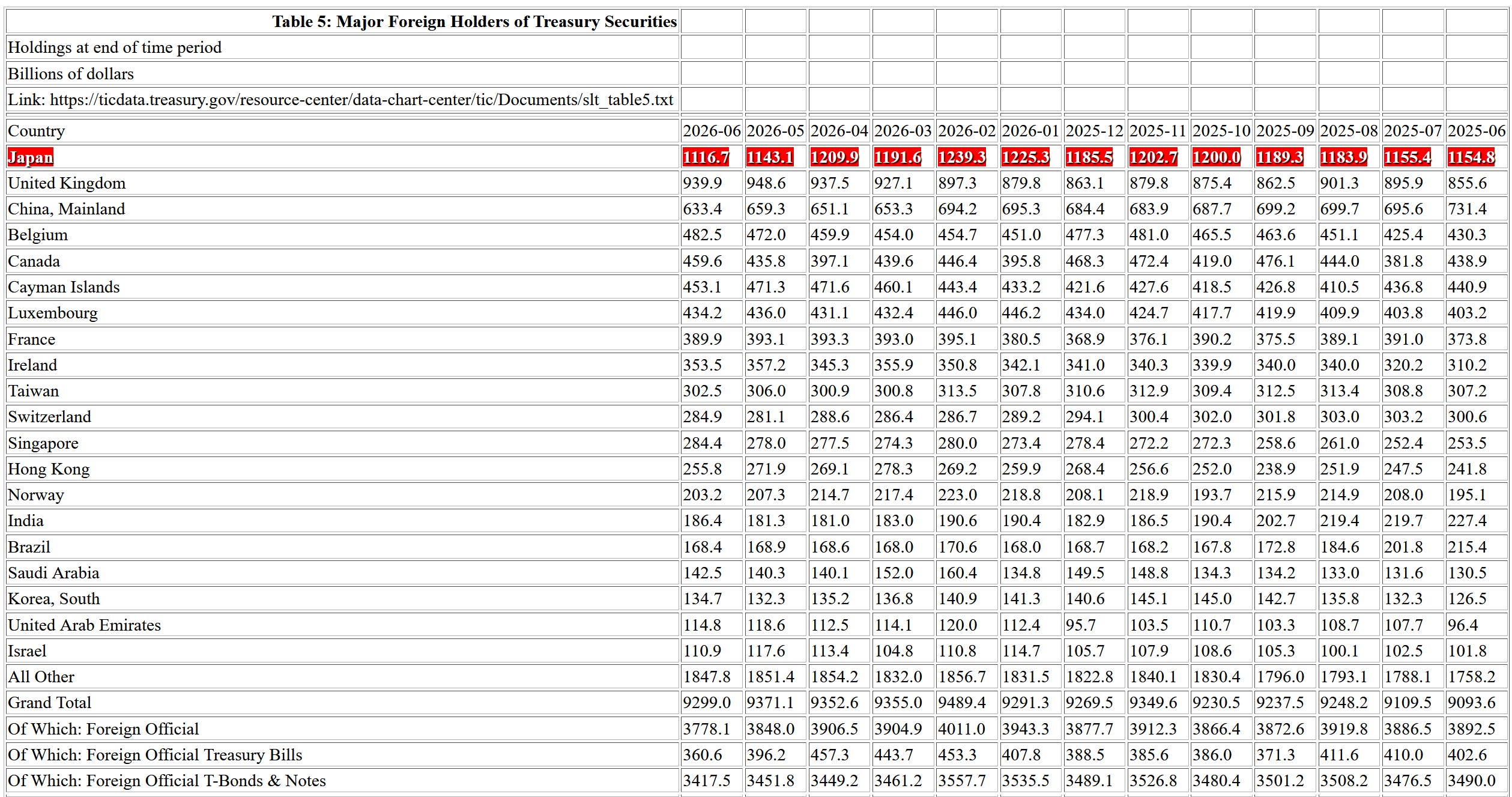
ベン・ノートンの実に優れて丁寧な記事。現在、日米間に何が起こっているのかを概括するために、さらに世界の脱ドル化の漸進的な進行により、今後何が起こりうるかに思いを馳せるためにも、とても秀逸な記事である。
|
◼️ベン・ノートン「ドル体制の危機:米国が日本を救済した真の理由」2026年8月23日 The dollar system is in crisis: The real reason the US bailed out Japan, BEN NORTON, AUG 23, 2026 円を支えるための米国の介入は、単に日本に関する問題ではなく、ドル体制の危機に関わるものだ。世界的に「脱ドル化」が進む中、米国政府は各国に米国債を売却してほしくないと考えている。 The US intervention to prop up the yen is not just about Japan, but about a crisis in the dollar system. Washington doesn’t want countries selling Treasury securities, as global dedollarization grows. |
|
米国政府は今年8月、ひそかに日本を救済した。 米国財務省は、日本の通貨である円の価値を支えるために外国為替市場に介入したのである。米国政府によるこうした介入は、東アジアや東南アジアの多くの国々が深刻な金融危機に直面していた1998年以来のことだった。 この出来事は、現在、日本のみならず米ドルを中心とする国際金融システムにおいて進行しつつある、新たな「スローモーションの危機」の症候である。 それは、ドル体制に生じている亀裂の拡大と、世界におけるドルの支配力の漸進的な低下を反映している。 |
|
The US government quietly bailed out Japan this August. The US Treasury intervened in the foreign exchange market to prop up Japan’s currency, the yen. It was the first time that Washington had done this since 1998, when much of East and Southeast Asia was facing a deep financial crisis. This incident is symptomatic of a new, slow-motion crisis that is unfolding today not only in Japan, but in the international financial system centered around the US dollar. It reflects the growing cracks in the dollar system, and the gradual decline of global dollar dominance. |
|
米財務省、円相場を支えるために介入 ブルームバーグは、米財務省によるこの外国為替(FX)介入を「異例の措置」と評した。 米国が行動を起こした理由として、表面的かつ安易に語られるのは、単に日本が米国の緊密な同盟国であり、対ドルでの円安が著しく進行して日本政府が懸念を抱いていたからだ、というものである。 実際、2021年1月には1ドル=約100円だったが、2026年7月には1ドル=160円を超える水準にまで円安が進んでいた。  しかし、今回の為替介入の主たる理由はそこにない。 スコット・ベッセント米財務長官は日本について、「米国経済や米国の納税者に資する形で、かつ世界経済を安定させるような方法で、日本を支援するためにあらゆる手段を講じる」と明言した。 ベッセントが「世界経済」と言った際、彼が真に意図していたのは、自らが維持に尽力している「ドル基軸の国際金融システム」のことだった。 |
|
ここで強調すべきは、ベッセントがウォール街出身の元ヘッジファンド・マネージャーであるという点である。彼は長年にわたり、大富豪のジョージ・ソロスと共に働き、通貨投機を専門としていた。両者は英ポンドの空売りを行い、ソロスに10億ドル以上の利益をもたらした取引で「イングランド銀行を打ち負かした」ことでも知られている。 ベッセントは、極めて巨額の富を持つ富裕層の一員である。彼が具体的にどれほどの資産を保有しているかは定かではない。億万長者(ビリオネア)であると広く報じられているが、その点には異論もある。少なくとも、数億ドル規模の資産を保有していることは確かだ。 いずれにせよ重要なのは、ベッセント自身、彼のような富豪たちを豊かにしてきた「ドル基軸の金融システム」を支えることに経済的な利害関係があるという点だ。そして日本は、このシステムの維持に一役買ってきたのである。 |
|
US Treasury intervenes to prop up Japan’s yen Bloomberg noted that the US Treasury’s foreign exchange (FX) intervention was an “unusual operation”. The superficial, facile explanation for why Washington acted was simply that Japan is a close US ally, and its currency has been depreciating very significantly against the US dollar, which has Tokyo concerned. In January 2021, one US dollar could buy roughly 100 yen; in July 2026, a dollar could buy more than 160 yen. However, that is not the main reason for this FX intervention. In reference to Japan, US Treasury Secretary Scott Bessent declared, “We will do whatever it takes to support them in a way that helps the American economy, the American taxpayer, stabilizes the global economy”. When Bessent said the “global economy”, he really meant the dollar-based international financial system, which he is dedicated to uphold. |
|
It is worth emphasizing that Bessent is a former hedge fund manager from Wall Street. He worked for years with billionaire oligarch George Soros, specializing in currency speculation. Together they “broke the Bank of England”, shorting the British pound in a trade that made Soros more than $1 billion. Bessent is part of a class of extremely rich plutocrats. Just how much wealth he has is not clear. He has been widely reported to be a billionaire, although this has been disputed. At the very least, he has hundreds of millions of dollars of wealth. Regardless, the point is that Bessent has a vested economic interest in propping up the dollar-based financial system that has enriched oligarchs like him. And Japan has helped to maintain this system. |
|
米国帝国における日本の特別な役割 日本は米国帝国において特別な役割を担っている。 何よりもまず、日本は世界で最も多くの米軍基地を受け入れている国である。 米国は世界中に約750の軍事基地や関連施設を保有しているが、 そのうち日本だけで120の基地を受け入れており、5万人以上の米軍兵士が常駐している。  日本は第二次世界大戦の終結以来、80年以上にわたり米国帝国によって占領されてきた。 この帝国主義的な体制が継続してきたのは、日本の企業エリート層が米国の占領から利益を得ているためである。日本は1955年以来、実質的に一党独裁国家であり、いわゆる「1955年体制」のもと、右派で企業寄りの親米政党である自由民主党(LDP)がほぼ独占的に政権を握ってきた。 日本の従属関係を象徴する出来事が、今年7月に起きた。米国建国250周年を祝う式典で、ドナルド・トランプと日本の超保守派である高市早苗首相が共に登場するドローンショーが行われたのだ。  日本が米国の軍事・政治上の緊密な同盟国であることは広く知られている。 しかし、日本が世界的なドル体制の維持において中心的な役割を果たしていることは、あまり知られていない。 |
|
Japan’s special role in the US empire Japan plays a special role in the US empire. First and foremost, Japan hosts more US bases than any other country. The US has approximately 750 military bases and other installations all around the world. Japan alone hosts 120, where more than 50,000 US troops are permanently stationed. Japan has been occupied by the US empire for more than 80 years, since the end of World War Two. The imperial arrangement has continued because Japanese corporate elites benefit from the US occupation. Japan has been essentially a one-party state since 1955, ruled almost exclusively by the right-wing, pro-corporate, pro-US Liberal Democratic Party (LDP), in what is known as the 1955 System. The perfect symbol of Japan’s subordination came this July, when the country celebrated the 250th anniversary of the founding of the United States, with a drone show featuring Donald Trump alongside Japan’s ultra-conservative Prime Minister Sanae Takaichi. Japan’s status as a close US military and political ally is widely known. What is less commonly known is the central role that Japan plays in upholding the global dollar system. |
|
世界的なドル体制における日本の特別な役割 日本は米国帝国に対して、もう一つの極めて重要な役割を果たしている。それは、米国債(米国の公的債務)の最大の外国保有国であるということである。 言い換えれば、日本は他のどの国よりも多くの資金を米国に貸し付けているのだ。 日本は何十年にもわたり、巨額の経常黒字を維持してきた。投資主導かつ輸出志向のモデルを追求し、先端技術を強みとする製造業大国としての地位を確立し、世界中の顧客に高品質な製品を販売してきた。 ハイテク製造業が生み出したこの莫大な黒字を、日本はどうしたのだろうか?その多くを米ドル建て資産、とりわけ米国債へと還流させてきたのである。  |
|
日本は、利回りが極めて低く、実質利回りがしばしばマイナスとなっていた2010年代(米国の金利は実質的にゼロでインフレ率を下回っており、連邦準備制度理事会(FRB)が量的緩和を行っていた時期)でさえ、米国債の購入を続けた。 日本が黒字を米国債の購入に充て続けたのは、ワシントンからの政治的圧力に直面していたからだけでなく(もちろんそれも一因ではあるが)、円安によって製造業が恩恵を受け、輸出競争力が向上するためでもあった(特に、中国からの競争激化を懸念していた時期においては)。 2026年2月時点で、日本は約1.24兆ドル(1,239,300,000,000ドル)の米国債を保有していた。  日本の米国債保有高と中国本土のそれを比較すると、その違いは際立っている。 中国政府は10年以上にわたり、米国債への純投資額を着実に削減してきた。中国の米国債保有高は2014年に1.3兆ドル超でピークに達した。 2026年時点では7000億ドルを下回っており、保有額は年々減少している。これは、ワシントンが自国通貨を「武器化」していることを受け、中国が着実に「脱ドル化」を進めているためである。  |
|
Japan’s special role in the global dollar system Japan provides another crucial service for the US empire: it acts as the largest foreign holder of Treasury securities (ie, US bonds, US government debt). In other words, Japan lends more money to the US than any other country. For decades, Japan has maintained a massive current account surplus. Following an investment-led, export-oriented model, it established itself as a manufacturing powerhouse, specializing in advanced technologies, selling high-quality products to customers all around the world. What has Japan done with the gargantuan surplus generated by its high-tech manufacturing sector? It has recycled much of it into US dollar assets — especially Treasury securities. |
|
Japan even continued to buy US government debt in the 2010s, when yields were extremely low, and real returns were often negative (as US interest rates were basically zero, below inflation, and the Federal Reserve engaged in quantitative easing). Tokyo kept converting its surplus into Treasuries not only because it faced political pressure from Washington (which was certainly a factor), but also because its manufacturing sector benefits from an undervalued yen, which makes its exports more competitive (particularly at a time when it fears growing competition from China). As of February 2026, Japan owned about $1.24 trillion ($1,239,300,000,000) in Treasuries. It is striking to contrast Japan’s Treasury holdings with those of mainland China. Beijing has been steadily reducing its net investment in US government debt for more than a decade. Its Treasury holdings peaked at more than $1.3 trillion in 2014. As of 2026, China now owns less than $700 billion, and its holdings shrink year by year, as Beijing steadily dedollarizes — due to Washington’s weaponization of its currency. |
|
米国債市場の機能不全とイラン戦争によるエネルギー危機 日本は長年にわたり米国債の最大保有国であり続けてきたが、ここ数ヶ月でその保有高を削減した。 その理由は、2月末にドナルド・トランプ政権がイランに対して不当な侵略戦争を開始したことにある。これが世界的なエネルギー危機を引き起こし、東アジアおよび東南アジアの経済に深刻な打撃を与えた。 日本は石油の供給をほぼ全面的に輸入に依存しており、原油の95%を西アジア(いわゆる中東)から調達している。そのうち約70%はホルムズ海峡を経由するが、イランはこの海峡を、米国の侵略戦争への対抗措置として封鎖した。 エネルギー価格の急騰は円に対してさらなる下落圧力をかけ、日本銀行は為替介入を余儀なくされた。 その後数ヶ月の間に、日本政府は米国債の保有高を一部削減した。これは為替介入(米国債を売却してドルを調達し、そのドルを使って自国通貨を買い戻す操作)を行ったためである。 7月までに、日本の保有高は1兆1200億ドル(1兆1167億ドル)を下回る水準にまで減少した。つまり、わずか4ヶ月の間に保有残高が1000億ドル以上減少したことになる。日本が大量の米国債を売却していたことは明らかだった。 この事態はワシントン(米国政府)を懸念させた。というのも、新型コロナウイルス・パンデミックに伴うサプライチェーンの混乱に続くインフレ危機以来、6年にわたって米国債の利回りが着実に上昇し続けていたからである。  |
|
米国政府が特に懸念しているのは、10年物米国債の利回りが高止まりしていることだ。というのはこの利回りは、社債、住宅ローン、自動車ローン、学生ローンなど、経済における他の金利の指標(ベンチマーク)として利用されているから。 こうした状況を受け、円を支えるための異例の為替介入からわずか数週間後、米国財務省は「長期の固定利付債(10年~20年物および20年~30年物のセクター)を対象とした流動性支援のための買い戻しオペの規模を、少なくとも倍増させる」と発表した。言い換えれば、米国財務省は自らの長期債を買い戻すために短期債を発行しており、それによってイールドカーブ(利回り曲線)の長期ゾーンをコントロールしようとしているのである。 これは極めて皮肉なことだ。というのも、スコット・ベッセントはかつて、ジョー・バイデン政権のジャネット・イエレン財務長官が主に短期債(「ビル」と呼ばれる証券)を発行したことを激しく批判していたから。当時の考え方としては、長期証券の供給を減らすことで、財務省は利回りの上昇圧力を緩和できるとされていた。 しかし、ベッセントがイエレンの後任となってからは、彼自身も全く同じことを行い、圧倒的に短期ゾーンの証券を発行しているのである。  |
|
今年7月、財務省が発行した証券の内訳は、ビル(償還期間1年以内の短期証券)が2兆5700億ドルであったのに対し、ノート(同2~10年の中期証券)は3103億ドル、ボンド(同20~30年の長期証券)はわずか373億ドルだった。 つまり、7月に発行された総額3兆ドル近い証券のうち、86.4%がビル(短期証券)であり、ノート(中期)は10.4%、ボンド(長期)に至ってはわずか1.3%に過ぎなかったということである。 |
|
US Treasury market dysfunction and Iran War energy crisis Japan has remained the number one holder of US Treasuries for years. However, in recent months, the country has reduced its holdings. Why was this? At the end of February, the Donald Trump administration launched an unprovoked war of aggression against Iran. This unleashed a global energy crisis that has severely harmed East and Southeast Asian economies. Japan relies almost entirely on importing its oil, and it gets 95% of its crude from West Asia (the so-called Middle East), roughly 70% of which passes through the Strait of Hormuz, which Iran closed in response to the US war of aggression. Skyrocketing energy prices put further downward pressure on the yen, forcing the Bank of Japan to intervene. In the following months, Tokyo trimmed some of its Treasury holdings, intervening in the foreign exchange market (by selling Treasuries to get dollars, and using those dollars to buy back its own currency). By July, Japan’s holdings had fallen to less than $1.12 trillion ($1,116,700,000,000). This means Tokyo’s net holdings dropped by more than $100 billion in just four months. Japan was clearly selling a lot of US Treasuries. This has troubled Washington, because the yields on US Treasury securities have been steadily rising for six years, since the inflation crisis that followed the supply-chain disruptions of the Covid-19 pandemic. |
|
The US government is particularly worried about the stubbornly high 10-year Treasury yield, which is used as a benchmark for other interest rates in the economy (such as corporate bonds, mortgages, car loans, student loans, etc.). This is why, just a few weeks after the unusual FX intervention to support the yen, the US Treasury announced that it “is increasing, by at least double, the size of liquidity support buyback operations for longer-dated nominal coupon securities (the 10-year to 20-year sector and the 20-year to 30-year sector)”. In other words, the US Treasury is issuing shorter-term debt in order to buy back its own longer-term debt, in an attempt to keep the long end of the yield curve under control. This is quite ironic, given that Scott Bessent harshly criticized Joe Biden’s Treasury secretary, Janet Yellen, because she issued mostly short-term debt securities (known as bills). The idea was that, by reducing the supply of longer-term securities, the Treasury could relieve the upward pressure on yields. But since Bessent replaced Yellen, he has done exactly the same, issuing overwhelmingly on the short end of the curve. |
|
This July, the Treasury issued $2.57 trillion in bills (short-term securities of up to one year in duration), compared to $310.3 billion of notes (securities of two to 10 years in duration) and just $37.3 billion of bonds (20 to 30 years in duration). That means 86.4% of the nearly $3 trillion in securities issued this July were bills (short-term securities), compared to 10.4% for notes (medium-term), and a mere 1.3% for bonds (long-term). |
|
「ペトロダラー」から「ヘッジファンド・ダラー」へ 今年6月時点で、外国政府が保有する米国債の残高は3兆7800億ドルに上った。その大部分(90%超)は、償還期間が1年から30年に及ぶ中期・長期の国債(ノートおよびボンド)で構成されている。 米国政府は外国政府にこれら長期米国債の購入継続を望んでいるが、売却されることは望んでいない。なぜなら、国債利回りが依然として高止まりしている状況下で売却が進めば、利回りのさらなる上昇圧力を招くことになるから。 問題は、米国債の発行が急増しているまさにその時に、外国政府の米国債保有意欲が低下していることである。米国の債務は急速に拡大しており、連邦財政赤字は一貫して対GDP比で約6%という水準にある。 新型コロナウイルスのパンデミック以降、外国勢による米国債の保有比率は32~33%前後で推移している。これは2010年代初頭の45%超という水準から大幅な低下である。  |
|
一方、国債発行額が大幅に増加しているにもかかわらず、外国の公的機関(つまり政府)による米国債保有額はここ数年、横ばいで推移している。 その大きな要因は、米ドルが「武器」として利用されることへの懸念の高まりだ。多くの外国中央銀行は、自国政府が米国の意に沿わない行動をとった場合、保有する米国債が差し押さえられるのではないかと危惧している。 2022年、米国や欧州諸国がロシアの保有する約3000億ドル相当のドル・ユーロ建て資産を凍結・差し押さえた決定は、世界に警鐘を鳴らす出来事となった。これを受けて、世界の中央銀行は米国債の代わりに金(ゴールド)の保有を急拡大させている。 つまり、米国債の供給が着実に増加する一方で、外国政府による需要は着実に減少している。 では、その穴を埋めているのは何だろうか?それは海外の民間投資家、とりわけヘッジファンドや、ロンドンのシティ(金融街)やカリブ海のタックスヘイブン(租税回避地)に拠点を置く企業などである。  |
|
日本と同様に、こうした民間企業もまた、世界のドル体制を支える役割を果たしている。アダム・トゥーズがこの体制を「ヘッジファンド・ダラー」あるいは「ビリオネア・ダラー」と呼ぶべきだと主張しているのは、まさにこのためである。 1971年の「ニクソン・ショック」で米国政府がドルと金の交換を停止した後、ワシントンはドルを支えるため、サウジアラビアなどの主要産油国に対し、その余剰資金を米国資産(主に米国債)へ還流させるよう圧力をかけた。現在でも「ペトロダラー(石油取引で得たドル)」は世界的なドル体制の重要な柱であり続けているが、ここ数十年の間に欧米経済の急速な金融化が進んだことで、「ヘッジファンド・ダラー」の重要性がさらに高まっている。 ドナルド・トランプ政権が金融セクターの規制緩和を一段と進める一方でステーブルコインを強力に推進してきた背景には、こうした事情がある。ステーブルコインの発行体は、その裏付け資産として米国債を利用することが多いためである(少なくとも、そう主張している)。 テザー(Tether)やサークル(Circle)といったステーブルコイン発行企業が、短期間のうちに主要国の政府と肩を並べるほどの米国債保有者となったのは、こうした理由によるものである。 しかし、こうした海外民間部門からの需要拡大をもってしても、米国債の利回りを低く抑えるには不十分だった。  それゆえに、ワシントンは外国政府による米国債の売却を特に懸念しているのだ。 |
|
From the petrodollar to the hedge fund dollar Foreign governments held $3.78 trillion in US Treasuries as of this June. The vast majority of that (more than 90%) consists of notes and bonds — that is, longer-dated securities, ranging from one to 30 years. Washington wants foreign governments to keep buying long-dated US securities, but it does not want them to be sold, because that would increase the upward pressure on Treasury yields, at a time when they remain stubbornly high. The problem is that foreign governments are less and less interested in holding US Treasuries — precisely at the moment when Treasury issuance is exploding, because US debt is rising so quickly, with federal deficits consistently at roughly 6% of GDP. The share of Treasuries held by foreigners has hovered around 32-33% since the Covid-19 pandemic. This is a stark decline from more than 45% in the early 2010s. |
|
Meanwhile, foreign official (ie, government) holdings of US Treasuries have remained static over the past few years, even as issuance has increased significantly. A big reason for this is growing fear of weaponization of the US dollar. Many foreign central banks are afraid their Treasuries could be seized if their governments do something that Washington doesn’t like. The 2022 decision by the US and European countries to seize Russia’s holdings of approximately $300 billion in dollar- and euro-denominated assets was a wake-up call, and global central banks have instead piled into gold. So the supply of US Treasuries has steadily risen, while foreign government demand has steadily fallen. What has filled the gap? Foreign private investors, especially hedge funds and other firms registered in financial centers like the City of London or tax shelters in Caribbean islands. |
|
Like Japan, these private firms are also holding up the global dollar system. This is why Adam Tooze has argued the arrangement should be called the “hedge fund dollar”, or the “billionaire dollar”. After the US government delinked the dollar from gold in the 1971 Nixon shock, Washington pressured major oil producers like Saudi Arabia to recycle their surpluses into US assets, primarily Treasuries, in order to prop up the dollar. The petrodollar still remains a significant pillar of the global dollar system, but the hedge fund dollar has become even more important in recent decades, given the rapid financialization of Western economies. This is one reason why the Donald Trump administration has further deregulated the financial sector, while strongly promoting stablecoins — because issuers often use Treasury securities to back their stablecoins (or at least claim to do so). This explains how stablecoin-issuing corporations, such as Tether and Circle, have in a short period of time become some of the world’s biggest holders of Treasuries, competing with major foreign governments. However, even this rising foreign private demand has not been enough to keep US yields low. This is why Washington is especially worried about foreign governments selling their Treasury holdings. |
|
ドル体制の危機:他国による米国債売却を望まない米国 これらすべてが示しているのは、ドルを基軸とする国際金融システムの根幹において危機が深まっているという事実である。 この結論を導き出したのは、ドル体制に関する世界的権威の一人であり、カリフォルニア大学バークレー校の経済学教授、『Exorbitant Privilege: The Rise and Fall of the Dollar and the Future of the International Monetary System(法外な特権:ドルの興亡と国際通貨システムの未来)』の著者でもあるアイケングリーンであり、彼はフィナンシャル・タイムズ(FT)紙への寄稿の中で、円相場を支えるためのトランプ政権による介入には「ドルに関する懸念すべき情報が含まれている」と指摘した。 彼は、「そのメッセージが示唆するのは、スコット・ベッセント財務長官ら当局者が、円を支えるためにドル建て証券を売却すれば、米国債市場の長期ゾーンに追加的な圧力がかかると懸念していたということだ」と記している。 この懸念は、ベッセントが為替介入の資金としてドルではなく、財務省の為替安定基金(ESF)が保有していたユーロを使用するという決定を下したことにも表れていた。 |
|
言い換えれば、米国政府は為替市場でユーロを売って円を買ったわけだが、それは米国債を売却したくなかったからである。というのは米国債を売れば、利回りの上昇圧力を高めることになってしまうから。 特に注目すべき点は、米国政府がこの介入において、欧州の表向きの「同盟国」に相談することなく保有ユーロを売却したことである。FT紙の報道によれば、欧州中央銀行(ECB)に通知がなされたのは、介入の実施後だった。 ドル体制の第一人者であるアイケングリーンは、FT紙で次のような結論を述べている。 |
|
《こうした動きは、準備通貨(基軸通貨)としてのドルの地位がかつてのようなものではなくなっていることを示している。各国の中央銀行は、米国債市場の流動性が高いため、外貨準備をドルで保有することに慣れ親しんできた。中央銀行が米国債を保有するのは、それが自由に売買でき、為替介入にも利用できるからである。しかし、今は状況が異なる。少なくとも、無制限に利用できるわけではないのだ。 … 要するに、米国の金融市場への影響を懸念するワシントン当局は、外国の中央銀行が保有するドル準備を取り崩すことを望んでいないということだ。これは、ドルがかつてのような魅力的な準備通貨ではなくなっていることを物語っている。この認識が浸透すれば、各国はより魅力的で即座に利用可能な代替手段の模索を加速させるだろう。外貨準備の多角化の動きは、今後さらに勢いを増す公算が大きい。》 |
|
米国政府による日本への救済措置から読み取るべき最も重要なメッセージはこれだ。世界的な「脱ドル化」の動きが加速する中、ドル体制の構造に亀裂が広がっているということである。 |
|
Crisis in the dollar system: The US doesn’t want other countries selling their Treasury holdings What all of this demonstrates is that there is a growing crisis in the heart of the dollar-based international financial system. This was precisely the conclusion reached by one of the world’s leading scholars of the dollar system, Barry Eichengreen, a professor of economics at the University of California, Berkeley, and author of the book Exorbitant Privilege: The Rise and Fall of the Dollar and the Future of the International Monetary System. In an article in the Financial Times, Eichengreen noted that the Trump administration’s intervention to prop up the yen “contains troubling information about the dollar”. “The message is that US Treasury secretary Scott Bessent & Co worried that selling dollar securities to prop up the yen would put additional strain on the long end of the US Treasury market”, he wrote. This concern was evidenced by Bessent’s decision to fund the FX intervention not with dollars, by rather with the euro that the Treasury held in its Exchange Stabilization Fund (ESF). |
|
In other words, the US government sold euro to buy yen in the FX market, because it didn’t want to sell Treasuries, as that would increase the upward pressure on yields. What was especially striking about this is that the US government sold its euro holdings in this intervention without consulting its ostensible “allies” in Europe. The FT reported that the European Central Bank (ECB) was only informed after the operation. Eichengreen, the leading expert on the dollar system, came to the following conclusion in the FT: |
|
« [These] moves are an indication that the dollar’s status as a reserve currency is not what it used to be. Central banks are accustomed to holding foreign reserves in dollars because markets in US Treasury securities are liquid. Central banks hold US Treasuries because they can be freely bought and sold and used in interventions. But not now, at least not in unlimited quantities. … The bottom line is that Washington, fearing the consequences for US financial markets, is reluctant to see foreign central banks use their dollar reserves. This is telling us that the dollar is not the attractive reserve currency it once was. When this message sinks in, other countries will redouble their search for more attractive, readily usable alternatives. Reserve diversification is apt to gather steam.» |
|
This is the most important message to take away from the US government’s bailout of Japan: The cracks in the structure of the dollar system are growing, as the global dedollarization movement picks up steam. |
|
ウォール街は円キャリートレードで利益を得ている 米国政府による日本への歴史的な救済措置について、もう一つ重要な点がある。それは、日本を従属させることで利益を得ているのがワシントン(米国政府)だけではなく、ウォール街も同様だということである。 なぜなら、ウォール街の金融機関や米国および西側諸国の投資家は、「キャリートレード」と呼ばれる手法を通じて、円安から利益を得ているからだ。 キャリートレードとは一体何だろうか?その仕組みは非常に単純である。金利の低い通貨で資金を借り入れ、その資金で金利の高い通貨建ての資産を購入し、その金利差(スプレッド)から利益を得るというものだ。 日本は数十年にわたり、極めて低い金利(時にはマイナス金利さえも)を維持してきた。そのため投資家は、円建てで借入を行い、その資金を米ドルに交換した上で、利回りの高い米国債や米国の株式を購入する(それによって米国株式市場の巨大なバブルを膨らませる一因となる)という行動をとってきた。 |
|
円キャリートレードは、ウォール街に莫大な利益をもたらしてきた。そしてこの取引は長年にわたり続いてきたが、それは単に金融市場の力(いわゆる「見えざる手」)によるものだけではない。日米両政府の間に、この取引を促進するというある種の暗黙の合意が存在することも要因となっている。 米国の金融資産、特に巨大テック企業の株式は、円キャリートレードによって大きな押し上げ効果を受けてきた。日本の輸出企業もまた恩恵を受けている。対ドルでの円安が進行することで、国際市場における製品の競争力が高まるからだ。 中国が急速にグローバル・バリュー・チェーンを駆け上がり、高付加価値産業へと進出して日本企業の利益率を圧迫する中、日本は中国との競争に苦慮している。そうした状況下において、この円安による後押しは、日本にとって大いに必要なものだった。 |
|
Wall Street benefits from the yen carry trade There is one other significant point to make about the US government’s historic bailout of Japan. That is that it is not only Washington that benefits from the subordination of Japan, but also Wall Street. This is because Wall Street financial firms, investors in the US and across the West more generally, profit from the depreciating yen through something known as the carry trade. What exactly is the carry trade? The idea behind it is very simple: it is when an investor borrows money in one currency, which has a low interest rate, in order to buy an asset in a different currency, which has a higher interest rate, to benefit from the spread (the differential). For decades, Japan had extremely low interest rates, including sometimes even negative rates. So what investors would do is take out debt denominated in yen, convert that money into US dollars, and then buy Treasury securities that had higher yields, or US corporate stocks (thereby helping to inflate the enormous bubble in the US equity market). The yen carry trade has been hugely profitable for Wall Street. And the trade has gone on for years, driven not only by financial markets — it’s not the “invisible hand” — but also because the US and Japanese governments have a kind of unspoken agreement in which they facilitate the trade. US financial assets, especially the stocks of Big Tech corporations, have seen a big boost from the yen carry trade. Japanese exporters have also benefited, because as the yen steadily depreciates against the dollar, it makes their products more competitive internationally. This is a much-needed boost at a time when Japan is having trouble competing with China, as the latter has rapidly moved up the global value chain and advanced into higher value-added industries, eating away at the profit margins of Japanese corporations. |
|
『ガーディアン』紙の編集委員会はこれまで多くの誤りを犯しており、通常は帝国主義的、親米、そして大西洋主義的である。しかし、この英国を代表する新聞は反トランプ派であるため、トランプ政権による日本への救済措置に対する同紙の批判的分析は的を射ており、為替介入の背後にある真の動機を次のように説明している: |
|
《今回の動きは円を救済するというよりは、スコット・ベッセント米財務長官が、米国に利益をもたらす資金供給源を維持しようとする試みである。日本の超低金利資金は、世界的な資金調達手段となっている。銀行家は円を借り入れ、それをドルに売り換えて、より高利回りの米国資産、特にハイテク株を購入している。上昇する米国株式市場は、担保価値と投資を支えている。日本の「キャリートレード」は、ウォール街がAI分野に数千億規模の資金をレバレッジで投入できる理由の一つだ。調査によると、AIは米国GDPの1%以上を吸収している。 ワシントンはこの資金供給源を維持したいと考えているが、円の暴落や米国債の大量売却を招くような事態は望んでいない。》 |
|
ウォール街にとっての「資金の蛇口」として円が果たすこの極めて重要な役割は、ワシントンにとっても利益となり、ドル体制を強化することでその世界的な覇権を維持している。 しかし、この体制の基盤に生じている亀裂は拡大しており、日本で進行中の「緩やかな金融危機」は、その体制の上に築かれた構造が深く蝕まれていることの表れである。 |
|
The editorial board of The Guardian has gotten many things wrong, and is normally pro-imperialist, pro-US, and pro-Atlanticist. But because the leading British newspaper is anti-Trump, its critical analysis of the Trump admin’s bailout of Japanhit the nail on the head, explaining the real motivation behind the FX intervention: |
|
« this is less a rescue of the yen than an attempt by Scott Bessent, the US treasury secretary, to preserve a cash spigot that benefits the US. Japan’s ultra-cheap money has become a global funding utility: bankers borrow yen, sell them for dollars and buy higher-returning US assets, notably tech shares. Rising American stock markets support collateral and investment. Japan’s “carry trade” is one of the reasons Wall Street can lever hundreds of billions into AI. Research suggests AI sucks up more than 1% of US GDP. Washington wants to keep this tap open, but not at the cost of a collapsing yen or US treasury sales.» |
|
This crucial role that the yen plays as a “cash spigot” for Wall Street also benefits Washington, upholding its global power by reinforcing the dollar system. However, the cracks in the foundations of this system are growing, and the slow-motion financial crisis unfolding in Japan is a symptom of the deep rot of the structure built upon it. |
なお「ドルの武器化」の話がでているが、プーチンは2024年時点で、《ドル武器化の愚かさーー米国指導層による「ドル殺し」》を語っている。